
- You have no items in your shopping cart
- Subtotal: ৳ 0.00
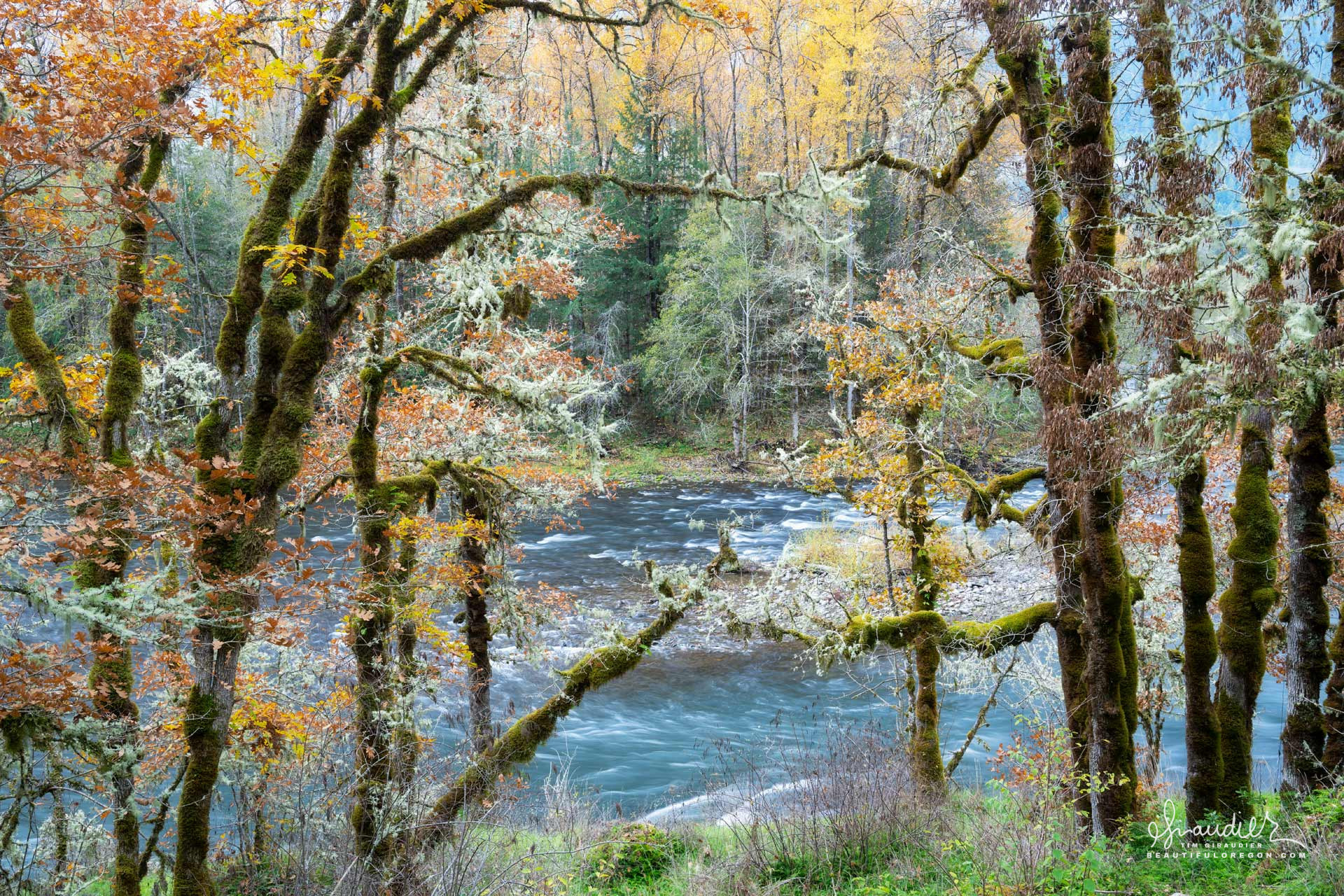


A stand of Oregon White Oak (Quercus garryana) and Oregon Ash (Fraxinus latifolia) grow along the sunny south facing bank of the Middle Fork Willamette River. Across the river, is a lush north facing riparian bottom land forest, comprised largely of Black Cottonwood (Populus trichocarpa) and Red Alder (Alnus rubra). Oregon White Oak (Quercus garryana) is a medium-sized tree that typically reaches heights of 50 to 80 feet, although it can occasionally grow taller under optimal conditions. It has a broad, spreading crown with stout branches and deeply lobed, deciduous leaves that are dark green on the upper surface and lighter green underneath. The bark is light gray to brown, becoming deeply furrowed with age. In the Willamette National Forest, Oregon White Oak is primarily found in open woodlands, savannas, and prairie habitats at lower elevations. It thrives in well-drained, nutrient-rich soils and is often associated with other species such as Ponderosa Pine, Douglas Fir, and grassland vegetation. The species has a relatively limited natural range, extending from southwestern British Columbia through western Washington and Oregon into northern California. Oregon White Oak plays a vital role in supporting biodiversity within the Willamette National Forest and other ecosystems where it occurs. The tree provides food and habitat for a variety of wildlife species, including birds, mammals, and insects. Acorns produced by the oak are an important food source for numerous wildlife species, while the tree’s branches and foliage offer shelter and nesting sites. Oregon White Oak has significant cultural and historical importance to indigenous peoples, as well as to European settlers and modern-day residents of the Pacific Northwest. Native American tribes utilized the tree for food, medicine, tools, and ceremonial purposes for thousands of years. European settlers and pioneers relied on the oak for building materials, fuel, and livestock forage. Today, Oregon White Oak continues to be valued for its aesthetic beauty, ecological benefits, and cultural heritage. Due to habitat loss, land-use changes, and other threats, Oregon White Oak ecosystems are increasingly rare and fragmented. Conservation efforts within the Willamette National Forest and other protected areas aim to preserve and restore oak woodlands and savannas, including the Oregon White Oak’s habitat. Management strategies may include prescribed burning, selective thinning, and invasive species control to maintain ecosystem health and promote oak regeneration. Oregon Ash (Fraxinus latifolia) is a medium to large deciduous tree that can grow up to 80 feet tall or more. It has a straight trunk with a broad, rounded crown. The leaves are compound, with 5 to 9 leaflets that are oval-shaped and dark green in color, turning yellow in the fall. Primarily found in riparian areas, wetlands, and lowland forests within the Willamette National Forest and other parts of the Pacific Northwest. It prefers moist, well-drained soils and is often associated with other tree species such as Douglas Fir, Western Red Cedar, and Oregon White Oak. Oregon Ash plays a crucial role in riparian ecosystems by stabilizing stream banks, improving water quality, and providing habitat for a variety of wildlife species. The tree’s seeds are a food source for birds and small mammals, while its foliage provides cover and nesting sites. The dense wood of Oregon Ash is also used by beavers for building dams and lodges. Oregon Ash has cultural and historical importance to indigenous peoples and local communities. Native American tribes utilized the tree for a variety of purposes, including food, medicine, and material for tools and baskets. European settlers and pioneers also relied on the tree for lumber, fuel, and other resources. Due to habitat loss, invasive species, and other threats, Oregon Ash ecosystems are increasingly vulnerable and in need of conservation efforts. Management strategies within the Willamette National Forest and other protected areas may include habitat restoration, invasive species control, and monitoring to ensure the health and resilience of Oregon Ash populations. Middle Fork Ranger District, Willamette National Forest. Lane County, Oregon West Cascades. Autumn, Lane County, Middle Fork Willamette River, Oakridge Oregon, Oregon Ash Tree, Riparian Forest, White Oak, Willamette National Forest
Q & A
There are no questions yet