
- You have no items in your shopping cart
- Subtotal: ৳ 0.00
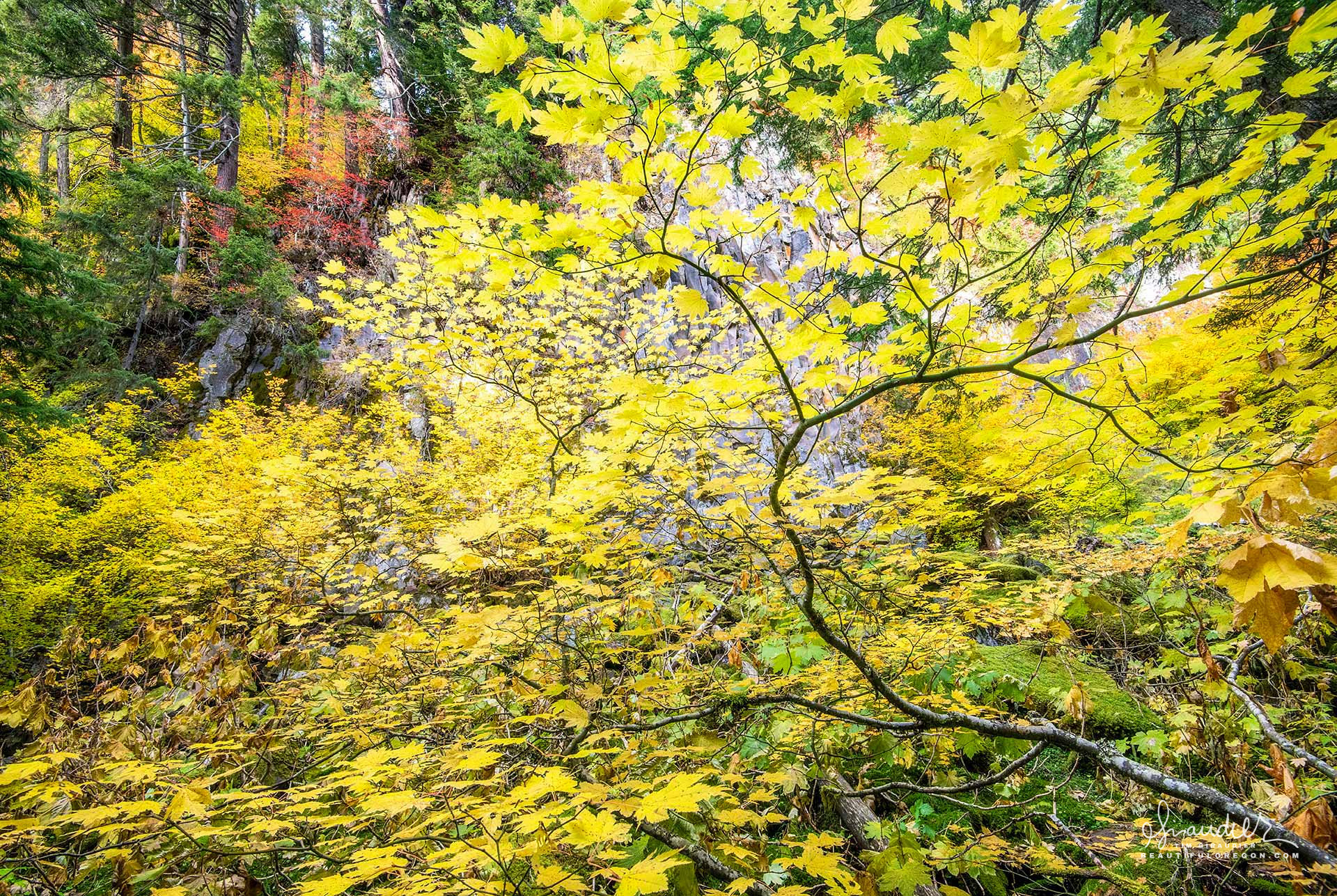


A lacy understory of Vine Maples at the peak of fall color, delights the senses, in an unusually beautiful and rugged section of the Mount Hood National Forest. Vine maple (Acer circinatum) is a deciduous shrub native to the Pacific Northwest, and is a member of the maple family (Aceraceae), is known for its distinctive growth habit, beautiful fall foliage, and adaptability to a variety of environmental conditions. In appearance Vine maple typically grows as a multi-stemmed shrub or small tree, reaching heights of 10 to 20 feet tall, although it can sometimes grow taller under favorable conditions. It has a spreading, irregular crown with slender branches that often droop or arch gracefully. The bark is smooth and grayish-brown when young, becoming more rough and fissured with age. The leaves are palmately lobed, with 7 to 9 deeply incised lobes that radiate from a central point, resembling the fingers of a hand. They are bright green in color during the growing season and turn vibrant shades of yellow, orange, and red in the fall, adding a splash of color to the autumn landscape. In the spring, vine maple produces small, inconspicuous flowers that are greenish-yellow in color and arranged in clusters. These are followed by winged samara fruits, similar to those of other maple species, which ripen in the summer and are dispersed by wind. Vine maple is well-adapted to the cool, moist climates of Western Oregon and the Pacific Northwest, and is commonly found in forests, woodlands, and along stream banks. It thrives in a variety of soil types, from well-drained upland sites to moist, poorly-drained bottom lands. The species has a relatively limited natural range, primarily occurring in western Oregon, Washington, and British Columbia. Vine maple plays an important role in forest ecosystems as a source of food and habitat for wildlife. The leaves and twigs are browsed by deer and elk, while the fruits are consumed by a variety of birds and small mammals. The dense growth habit of vine maple also provides cover and nesting sites for wildlife, contributing to the overall biodiversity of the forest. Mount Hood National Forest, Clackamas County, Oregon West Cascades Autumn, Clackamas County, Mount Hood National Forest, Oregon West Cascades, Vine Maple
Q & A
There are no questions yet