
- You have no items in your shopping cart
- Subtotal: ৳ 0.00
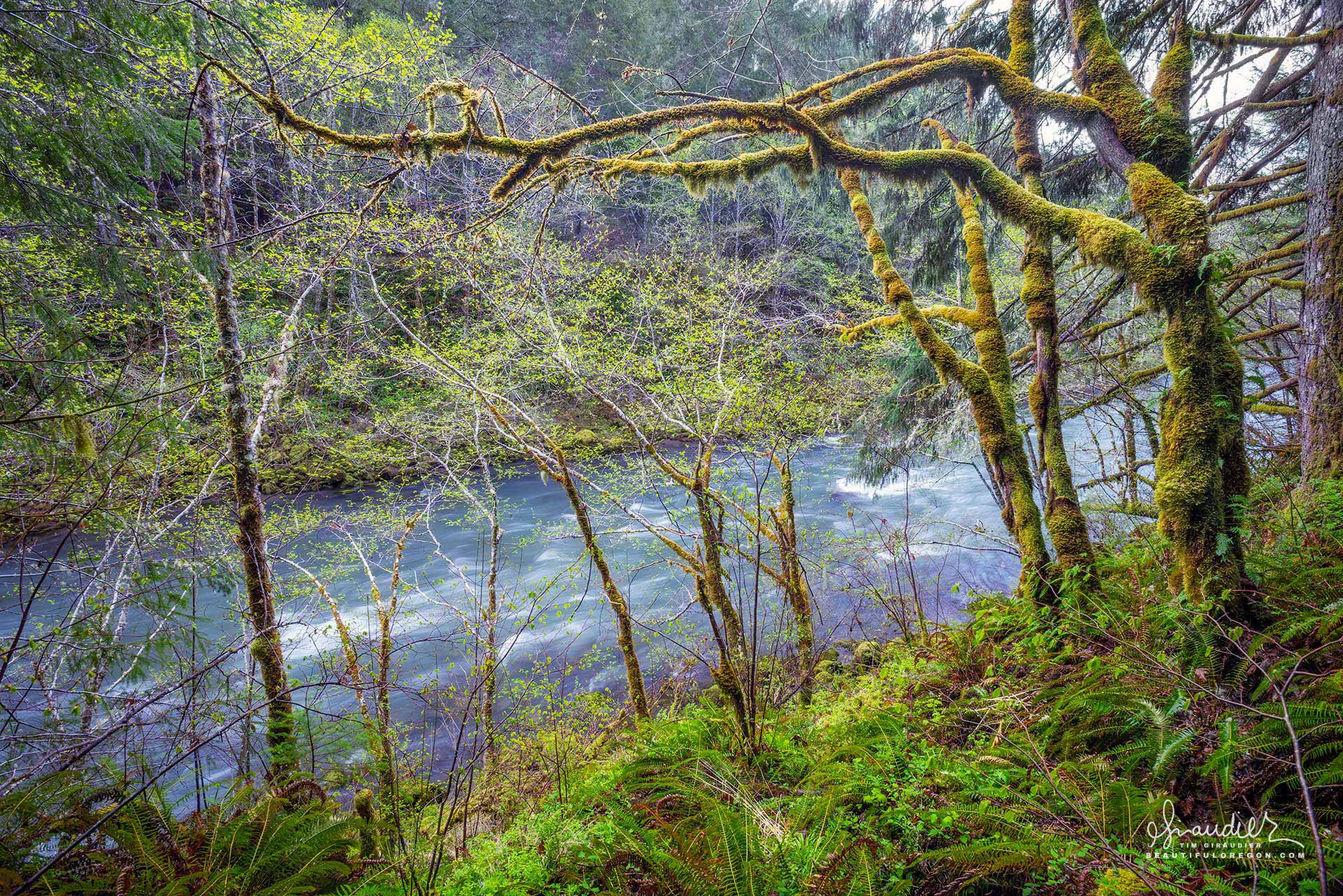


An Oregon White Oak (Quercus garryana) being crowded and shaded by Doug-fir, reaches its branches over the river in search of direct light. In this photograph, the Oregon white oak growing along the North Fork of the Middle Fork Willamette River is a remnant of a once more widespread presence, reflecting both the region’s natural history and the pressures of modern land use. Today, these trees are scattered and limited in number, a shadow of their historic range along this river corridor. Historically, Oregon white oak thrived in open woodlands and savannas, maintained by periodic low-intensity fires that cleared competing vegetation. These conditions fostered their dominance, particularly on south-facing slopes and well-drained soils. However, decades of fire suppression, agricultural development, and conifer encroachment have drastically reduced their habitat. Along the North Fork, the remaining oaks often persist in isolated patches or as solitary trees, surrounded by dense conifer forests or human-altered landscapes. Despite their diminished numbers, the remaining Oregon white oaks are ecologically significant. Their spreading crowns and deep roots stabilize soils, benefiting nearby riparian zones by reducing erosion and supporting water quality. The trees provide vital food and shelter for wildlife, including acorns for deer, squirrels, and birds. Even in their diminished state these oaks also contribute to the broader ecological balance of the river system. North Fork of the Middle Fork Willamette River. Willamette National Forest, Lane County, Oregon West Cascades. Lane County, North Fork Willamette River, Oakridge Oregon, White Oak, Willamette National Forest
Q & A
There are no questions yet