
- You have no items in your shopping cart
- Subtotal: ৳ 0.00
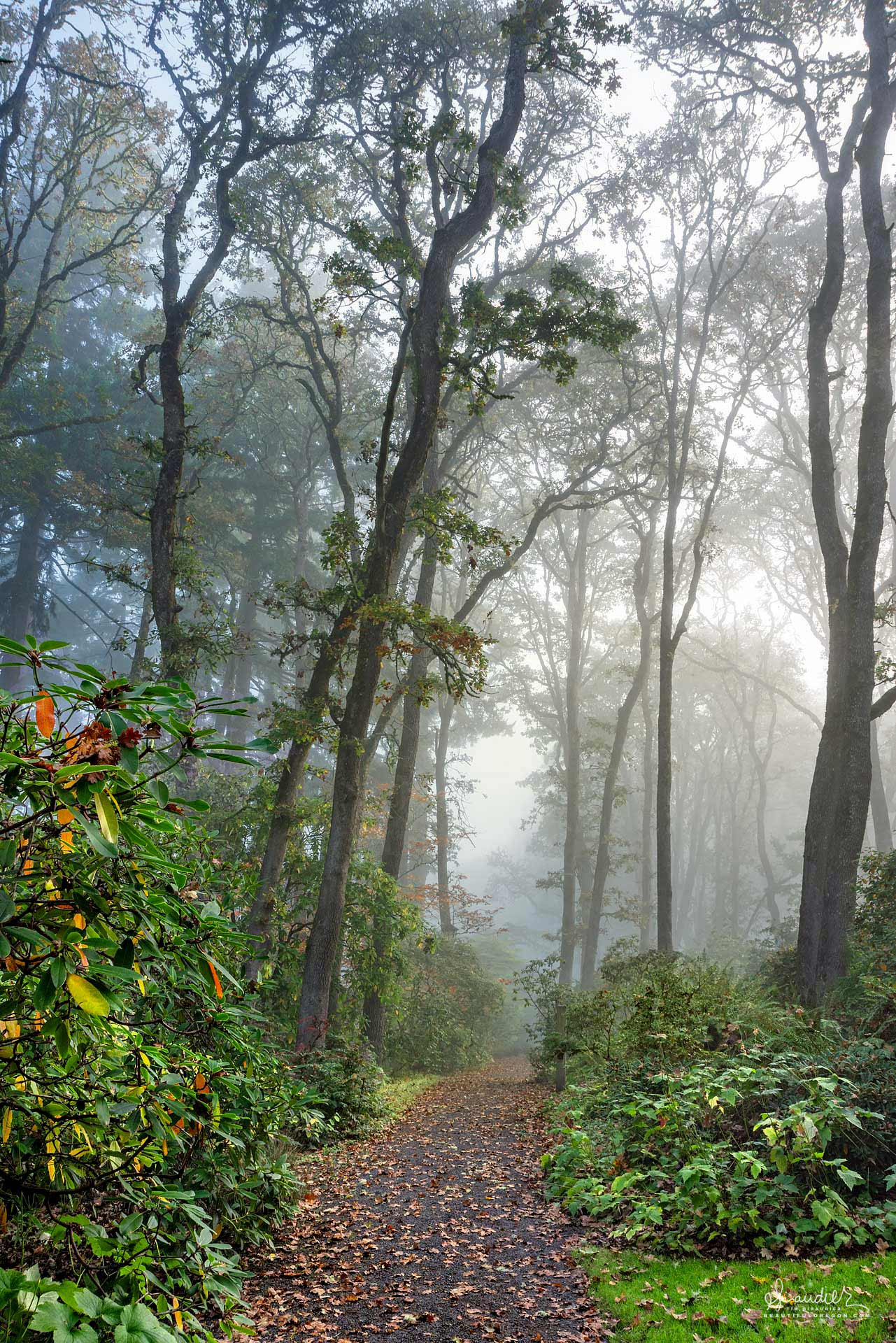


A foggy forested path winds its way through a stand of White Oak and Pacific Rhododendron at Hendricks Park, in Eugene Oregon. Hendricks Park, the oldest city park in Eugene, Oregon, was established in 1906 and remains a significant part of the city’s cultural and environmental history. Situated on a forested ridge in southeastern Eugene, the park spans approximately 78 acres and reflects early efforts to preserve natural landscapes while providing public recreational spaces. Named in honor of Thomas G. Hendricks, a prominent banker and civic leader, the park was created following a donation by his widow, Martha Hendricks, which supported the acquisition of land. From its inception, the park was envisioned as a place for community enjoyment and environmental conservation. Initially, Hendricks Park was characterized by its natural beauty, with minimal formal development or landscaping. This changed in the 1930s when the City Beautiful Movement inspired efforts to improve the park’s infrastructure and accessibility. These enhancements included the creation of pathways, picnic areas, and gardens, transforming the park into a more structured and inviting public space. Among the most notable developments was the establishment of a rhododendron garden, which began to take shape in the mid-20th century. Now covering over 12 acres, this garden features more than 6,000 individual plants, including both native and hybrid species, making it a significant botanical resource in the region. Beyond its landscaped gardens, Hendricks Park plays an important ecological role. Its forested areas, dominated by mature Douglas fir, Western Red Cedar, and Bigleaf Maple, provide vital habitats for native flora and fauna. A network of trails allows visitors to explore these natural spaces, offering opportunities for hiking, bird watching, and quiet reflection. The park has long been a space where recreation and education intersect, with guided tours and events promoting environmental awareness and stewardship. In recent years, efforts to preserve the ecological and historical aspects of Hendricks Park have intensified. The City of Eugene’s Parks and Open Space Division, along with local volunteers and organizations such as the Friends of Hendricks Park, has undertaken projects to restore native habitats, manage invasive species, and maintain the park’s infrastructure. Hendricks Park exemplifies Eugene’s early vision of integrating urban development with natural preservation. Its blend of historical significance, botanical importance, and ecological value has made it a cherished landmark. Today, it continues to serve as a space for recreation, education, and conservation, ensuring its lasting legacy for future generations. Eugene Oregon, Foggy, Lane County, Trail, White Oak
Q & A
There are no questions yet