
- You have no items in your shopping cart
- Subtotal: ৳ 0.00
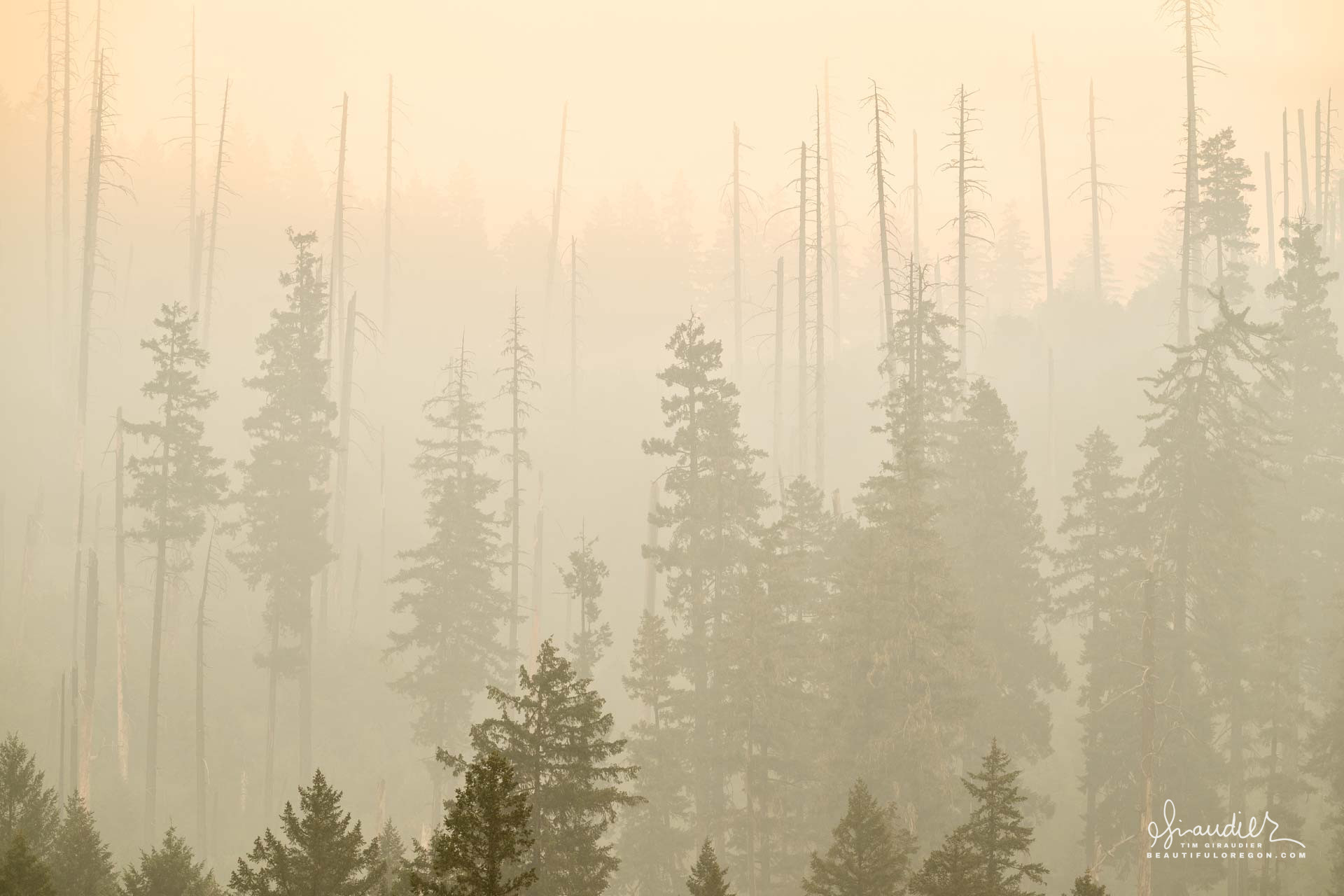


Dense smoke fills the forest and filters sunlight as the Chalk fire rapidly grows in size. This wildfire was part of an extensive complex forest fires ignited by an intense July lightning storm which impacted a wide swath of the Oregon Cascades. The Chalk Fire began on July 17, 2024, in the dense, timbered slopes of the southern Willamette National Forest, about nine miles north of Oakridge, Oregon. Ignited by lightning during a summer storm system that sparked several fires in the region, it quickly took hold in steep terrain with heavy fuel accumulation—conditions that have become increasingly common in Oregon’s Cascade Range. The fire was one of several grouped under what became known as the Willamette Complex South, a coordinated response effort aimed at managing multiple lightning-caused fires across a rugged landscape. As the Chalk Fire grew, fire managers issued an emergency area closure on July 29 to restrict public access and ensure firefighter safety. Steep slopes, narrow access routes, and pockets of heavy vegetation made direct attack difficult in some sections. Crews relied on a combination of control line construction, burnouts, and containment strategies designed to keep the fire from advancing into critical areas near infrastructure and recreation corridors. Air support was used intermittently when smoke conditions allowed, but much of the suppression relied on ground crews navigating challenging terrain. By early September, the fire was largely boxed in. Containment lines had held through dry weather and intermittent wind events. Management teams began reducing the size of assigned crews, and operations transitioned from active suppression to mop-up and patrol. On September 26, officials confirmed that the Chalk Fire had reached full containment, with only isolated smoldering within the interior. Over the next several days, attention turned toward road repair and slope stabilization. Firelines were inspected and regraded, culverts were cleared of debris, and areas of bare soil were seeded or mulched to reduce the risk of erosion during the coming winter rains. In total, the Chalk Fire burned approximately 6,010 acres. The fire moved through a typical mid-elevation Cascade forest composed of Douglas fir, western hemlock, and mixed hardwoods. Because of the variability in burn intensity, the ecological outcomes were uneven. In lower-severity zones, the fire may help restore more natural forest conditions by thinning dense understory vegetation and reducing ladder fuels. In higher-severity patches, however, tree mortality was extensive, and post-fire regeneration could be slow, especially on slopes where soil stability and seed sources are limited. These effects are consistent with patterns seen across the region in recent years, where warmer temperatures, longer dry seasons, and heavy fuel accumulation have led to increasingly intense fires. The Chalk Fire reflects the broader shift in wildfire behavior in western Oregon—from historically infrequent, low- to moderate-intensity fires to larger, more complex incidents that require months of management. Its development, containment, and post-fire rehabilitation illustrate how modern wildfire operations must adapt to challenging terrain, evolving climate conditions, and the need to balance ecological recovery with public safety. In that context, the Chalk Fire stands as another example of how fire is reshaping the forests of the Oregon Cascades, not just as an emergency to be suppressed, but as a recurring force that must be understood and planned for. Forest Fire, Lane County, Oakridge Oregon, Willamette National Forest
Q & A
There are no questions yet