
- You have no items in your shopping cart
- Subtotal: ৳ 0.00
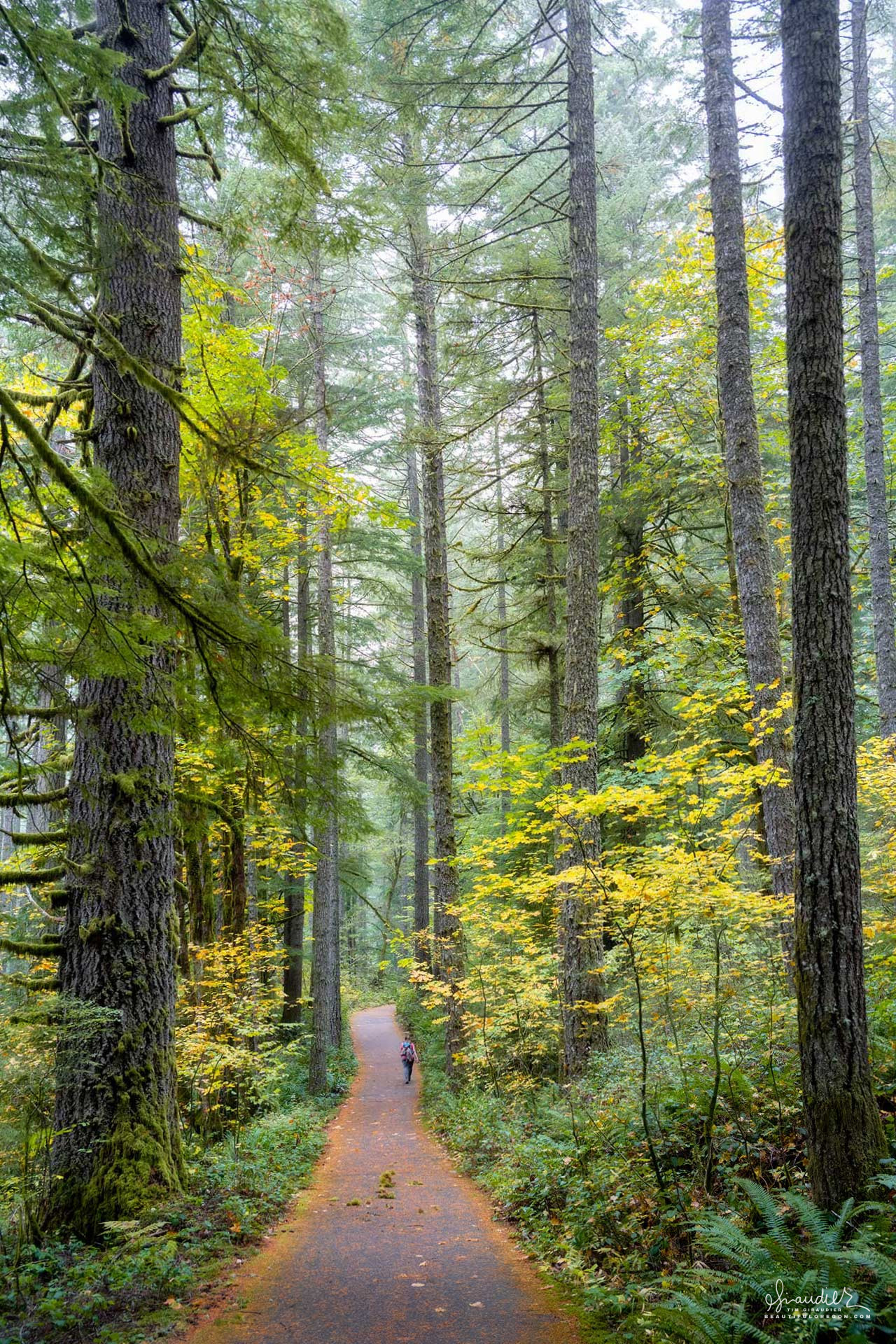


Dwarfed by a towering forest of Douglas-fir, a hiker quietly strolls amongst colorful vine maple, along the canyon rim trail at Silver Falls State Park. Each autumn I try my best to return to the loop trail at Silver Falls, spending the day visiting each waterfall, and then returning to the main parking lot along the upper trail. Even on the busiest day, there is always a quiet place where you can sit alone and enjoy autumn’s splendor and listen to the sound of rushing water. This photograph is one of my more recent favorites, and was excited to add it to the website. Silver Falls State Park, located in Northwest Oregon, is one of the state’s crown jewels, showcasing the breathtaking beauty of the Pacific Northwest. The park spans over 9,000 acres and is renowned for its rugged terrain and stunning waterfalls, including the South Falls, North Falls, and Lower South Falls. While it’s understood the Molalla people once occupied the area we now call Silver Falls State Park, little is known about their actual practices here, although I know it’s safe to assume, that they would have found spiritual and resource significance in such a rich, and stunningly beautiful location. As settlers moved westward in the mid-19th century, the region surrounding Silver Falls began to change drastically. In 1888, the first recorded mention of Silver Falls occurred when a homesteader, a man named John E. Smith, established a claim near the waterfall canyon. This marked the beginning of a new chapter in the area’s history. By the early 20th century, the waterfalls became a local tourist attraction, and the community recognized their potential for public enjoyment and preservation. The formal establishment of Silver Falls State Park in 1933, during the Great Depression, was made possible through the efforts of the Civilian Conservation Corps (CCC), which undertook the construction of many of the park’s trails, roads, and facilities. Geologically, Silver Falls is a treasure trove that reveals much about the region’s geological past. Formed by volcanic activity and subsequent erosion, the park’s landscape is characterized by basalt formations known as the Columbia River Basalt Group. These basalt flows were created by volcanic eruptions that occurred approximately 15 to 17 million years ago. Over time, water erosion sculpted the waterfalls, creating the stunning cascades that visitors see today. The park features ten major waterfalls, with the most prominent being South Falls, which cascades over 177 feet, North Falls, known for its picturesque setting, and Lower South Falls, featuring a unique viewing area behind the water flow. Each waterfall in the park tells a geologic story depicting the continuous flow of water, and its carving its way through layers of rock formation. In addition to its geologic significance, Silver Falls State Park plays a crucial role in ecosystem preservation. The diverse range of habitats supports numerous wildlife species, including salmon, deer, and a variety of bird species. The continued protection of this area ensures that both the natural beauty and the rich history of the land can be preserved for future generations. Autumn, Marion County, Oregon State Parks, Silver Fallls State Park, Trail
Q & A
There are no questions yet