
- You have no items in your shopping cart
- Subtotal: ৳ 0.00
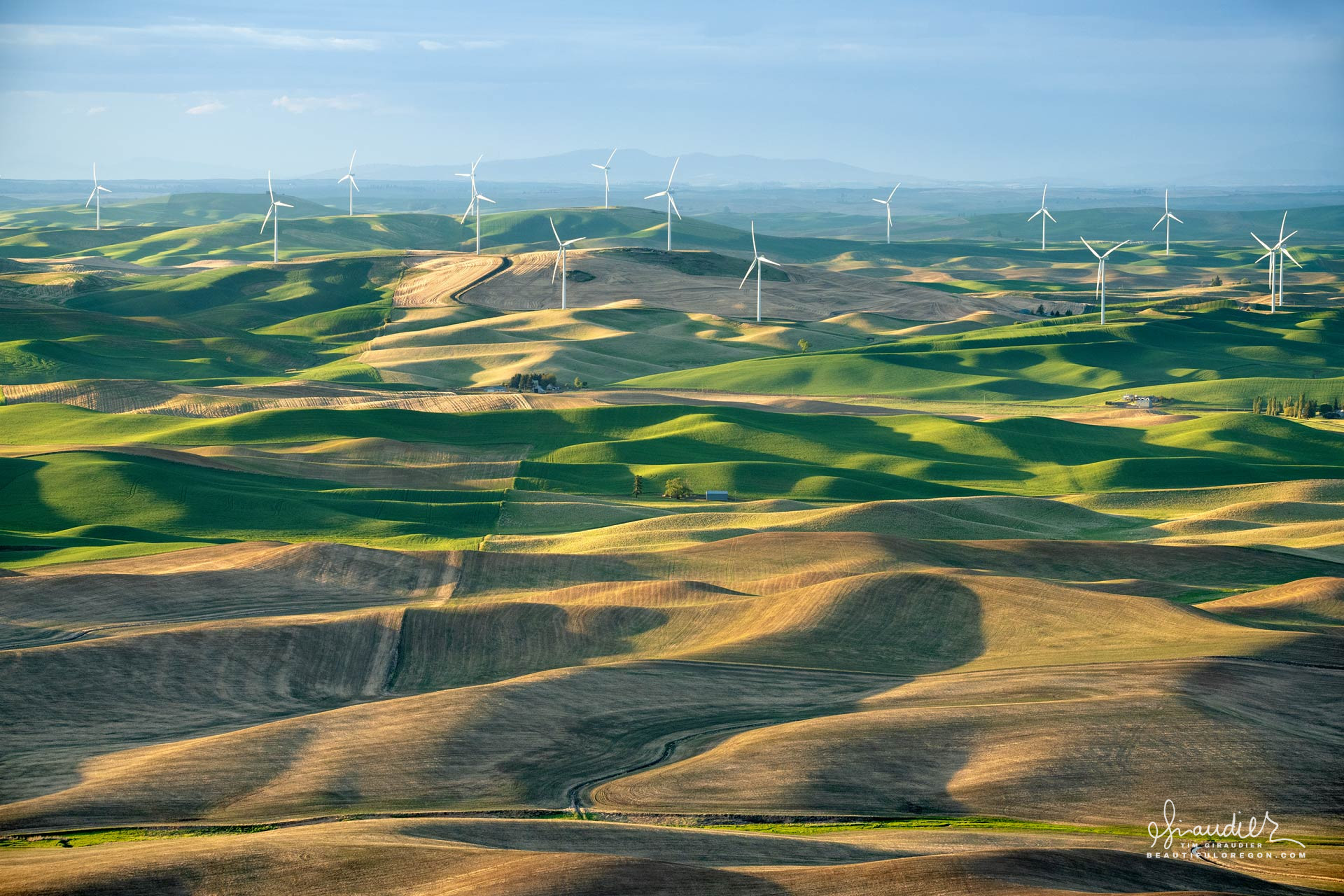


The Palouse Hills of Washington State, a striking landscape of undulating loess hills and agricultural abundance, have become home to a new and powerful symbol of renewable energy: wind turbines. These towering structures, often rising over 250 feet, stand as sentinels of a sustainable future amidst the rolling golden fields of wheat, lentils, and barley. Their presence blends the region’s natural beauty with technological ingenuity, creating a fascinating juxtaposition of the ancient and the modern. The Palouse, with its unique geography, offers an ideal backdrop for wind energy development. Formed by millennia of wind-blown silt deposits, the hills undulate like waves frozen in motion, creating a visually arresting landscape. These loess hills, known for their fertile soils, are primarily used for dry-land farming, making the Palouse one of the most productive agricultural regions in the United States. The sweeping vistas of the region, punctuated by solitary farmsteads and grain silos, are now shared with the sleek silhouettes of wind turbines. The Palouse Hills possess a significant advantage for wind energy: consistent and strong winds sweeping across the open terrain. The geography funnels wind currents, creating an optimal environment for turbines to generate electricity. The turbines’ long, aerodynamic blades, often stretching more than 150 feet, capture the kinetic energy of the wind and convert it into clean, renewable power. Each rotation of the blades is a testament to the natural forces at play in this region, underscoring the area’s suitability for sustainable energy production. The introduction of wind turbines in the Palouse has brought economic benefits to local communities. Landowners who lease portions of their fields for turbines receive steady income, supplementing traditional farming revenues. The construction and maintenance of these wind farms create jobs, further bolstering the rural economy. Environmentally, wind energy offers a clean alternative to fossil fuels, reducing greenhouse gas emissions and mitigating climate change. This transition aligns with Washington State’s commitment to sustainability, and the Palouse plays a crucial role in achieving these goals. While the presence of wind turbines has been largely positive, it has also sparked discussions about the balance between preserving the visual and cultural heritage of the Palouse and embracing modern energy solutions. For some, the turbines disrupt the timeless aesthetic of the hills; for others, they represent a necessary evolution in the face of global challenges. These debates reflect broader societal tensions around energy transition, land use, and environmental stewardship. IMPACT ON ENVIRONMENT: The installation of wind turbines in the Palouse Hills of Washington State has sparked significant controversy, reflecting the tension between environmental progress and the preservation of cultural and scenic landscapes. While wind energy represents a critical step toward combating climate change and reducing reliance on fossil fuels, the visual, ecological, and social impacts of turbines in the Palouse have drawn criticism from residents, conservationists, and farmers. The Palouse is renowned for its breathtaking scenery: an unbroken expanse of rolling, loess hills that change hues with the seasons, from green in spring to golden in late summer. For many, the appeal of this landscape lies in its natural and agricultural simplicity, uninterrupted by industrial structures. Wind turbines, standing hundreds of feet tall and visible from miles away, dramatically alter the visual character of the region. Critics argue that the sleek, mechanical forms of turbines clash with the organic contours of the hills, disrupting the sense of timelessness that defines the Palouse. Residents who cherish the area’s quiet beauty express concerns that the turbines diminish its unique charm, potentially affecting tourism and the overall identity of the region. The ecological consequences of wind farms in the Palouse have also been a point of contention. The region supports diverse wildlife, including migratory birds, raptors, and bats. Wind turbines, despite their environmental benefits, pose risks to these animals. Birds and bats, particularly species that rely on open airspace for migration or hunting, are vulnerable to collisions with turbine blades. While developers often conduct environmental impact studies before constructing wind farms, critics argue that these measures are insufficient to prevent harm to wildlife. Conservationists stress the need for more stringent guidelines to mitigate these effects, such as better site selection, turbine design improvements, and operational adjustments during peak migration periods. Land use conflicts add another layer to the controversy. While wind farms provide supplemental income to landowners who lease their fields for turbines, some farmers and neighbors express concern about the long-term implications. Turbines and their associated infrastructure, such as access roads and power lines, can fragment farmland and reduce the amount of land available for cultivation. This is especially significant in a region where agriculture is the primary economic driver. Additionally, the presence of turbines may complicate farming operations. Large machinery, essential for planting and harvesting, may face challenges navigating fields dotted with turbines. Some farmers worry that these disruptions could reduce efficiency and increase costs over time. The noise generated by wind turbines, though generally low, has been a source of complaints from nearby residents. The constant hum and occasional low-frequency vibrations, often described as “wind turbine syndrome,” are cited by opponents as causes of sleep disturbances, stress, and other health issues. While scientific studies have not conclusively proven these claims, the perception of harm has fueled resistance to turbine projects in the region. While wind farms bring financial benefits to participating landowners, critics argue that the distribution of these benefits is unequal. Large landowners may profit significantly, while neighbors who do not host turbines but live nearby must contend with the visual and acoustic impacts without compensation. This disparity has heightened tensions within communities, with some residents feeling excluded from decision-making processes. Supporters of wind energy in the Palouse emphasize its broader benefits, including reduced carbon emissions, job creation, and energy independence. They argue that the challenges posed by turbines, while real, can be managed through better planning, community engagement, and technological advancements.Opponents, however, contend that these benefits do not justify the alteration of one of the most iconic landscapes in the Pacific Northwest. They advocate for alternative renewable energy solutions, such as solar farms or smaller, community-driven wind projects, that could achieve environmental goals with less impact on the region’s character. The controversy over wind turbines in the Palouse Hills highlights the complex interplay of environmental priorities, cultural values, and economic interests. As the push for renewable energy accelerates in the face of climate change, the debate underscores the importance of balancing progress with respect for local landscapes and communities. The Palouse, with its unique identity and ecological significance, serves as a microcosm of the broader challenges and opportunities in the transition to sustainable energy. Whitman County, Washington State landscape photography. Agriculture, Alternative Energy, Palouse Hills, Washington State, Wheat, Whitman County
Q & A
There are no questions yet