
- You have no items in your shopping cart
- Subtotal: ৳ 0.00
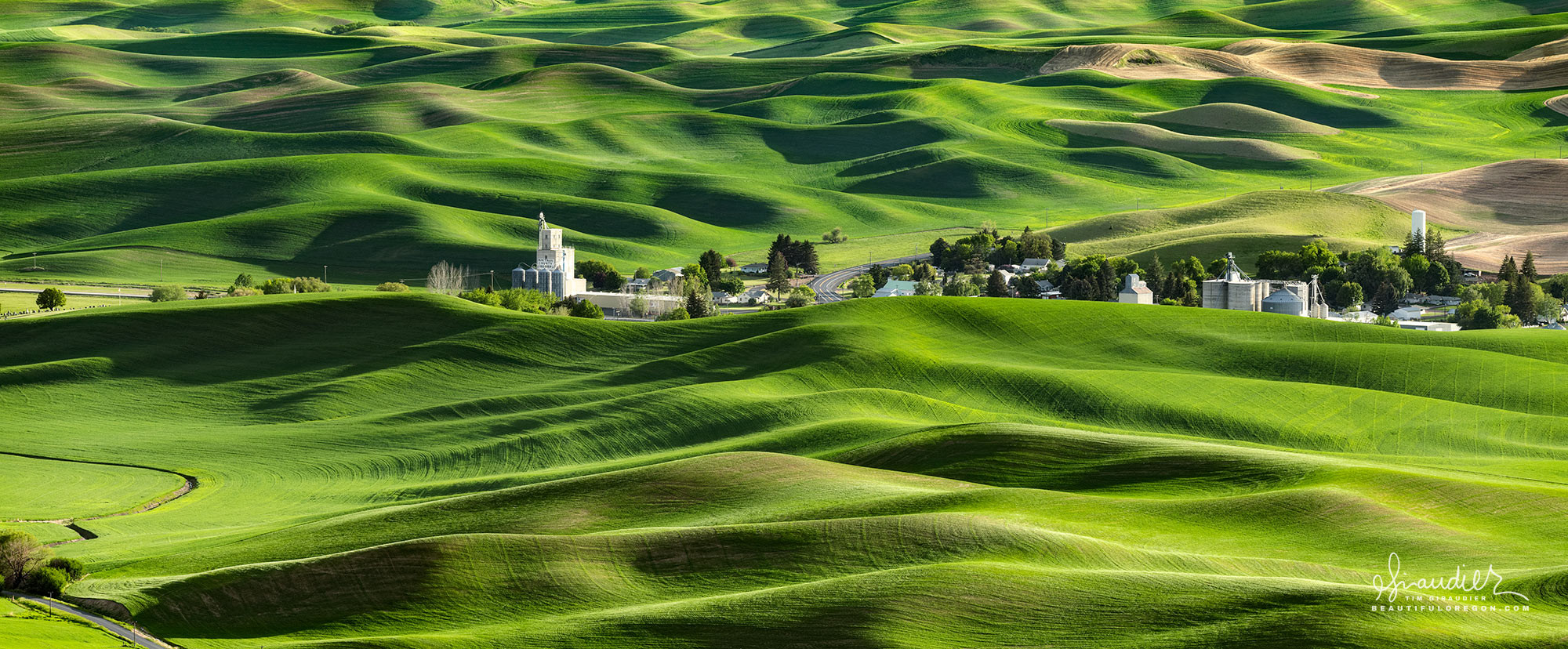


The farming community of Steptoe, surrounded by an undulating sea of winter wheat in the Palouse Hills of Eastern Washington. Built upon a foundation of 15 million year old flood basalt, the wind blown dust called ‘loess’ subsequently blew in from the southwest to create the characteristic hills of the Palouse. Today Whitman County ranks amongst the highest wheat producer in the United States, with an average of 93.8 bushels per acre having been produced in 2018. In 2021, the region is now in a prolonged state of drought, with precipitation levels not seen since the 1920’s. The Palouse Hills of eastern Washington State form one of the most visually distinctive and agriculturally productive landscapes in the Pacific Northwest. Characterized by its undulating terrain, loess-rich soils, and striking seasonal contrasts, the region has played a central role in shaping the economic and cultural identity of Washington State—particularly within Whitman County, which lies at the heart of the Palouse. Geologically, the Palouse Hills are the product of an extraordinary confluence of natural forces. During the late Pleistocene epoch, powerful winds swept across the Columbia Plateau, depositing deep layers of fine silt—known as loess—over the underlying basalt flows of the Columbia River Basalt Group. Over tens of thousands of years, these windblown sediments accumulated into soft, fertile hills, some reaching 200 to 300 feet in height. The loess deposits in the Palouse are among the deepest on Earth, with some profiles exceeding 250 feet in depth. The result is a landscape of rolling, dune-like hills that appear almost fluid in form, shaped by both wind and water over millennia. Historically, the Palouse Hills were home to Indigenous peoples, including the Palus (or Palouse) tribe, from whom the region takes its name. These Native communities relied on the region’s abundant resources, including camas root, salmon, and game, and maintained trade networks that extended across the Columbia Plateau. Following U.S. expansion into the area in the mid-19th century, treaty agreements and military force displaced many of the Native inhabitants, paving the way for Euro-American settlement. The agricultural transformation of the Palouse Hills began in earnest in the 1870s, as settlers recognized the fertility of the loess soils and the suitability of the climate for dryland farming. Early agriculturalists quickly discovered that winter wheat—planted in the fall and harvested the following summer—was ideally suited to the region’s cool, wet winters and dry, sunny growing season. The fine-grained soils retained moisture efficiently, allowing wheat to thrive even without irrigation. By the early 20th century, the Palouse had become one of the most important wheat-producing regions in the United States. Whitman County, situated in the center of the Palouse, emerged as the agricultural heart of the region. Today, it routinely ranks among the top wheat-producing counties in the nation. In addition to soft white wheat, the county’s farmers cultivate barley, lentils, garbanzo beans, and canola, making the region a cornerstone of the inland Pacific Northwest’s dryland agriculture. The distinctive topography, however, presents challenges: the steep slopes make soil erosion a constant threat. As a result, conservation tillage practices and contour plowing have become widespread in recent decades, helping preserve the integrity of the landscape. The economic life of the Palouse Hills is closely tied to Washington State University, located in the city of Pullman, within Whitman County. Established in 1890 as the state’s land-grant institution, WSU has played a key role in developing sustainable agricultural practices, crop research, and soil conservation tailored to the Palouse’s unique conditions. Its presence has also made Pullman a hub of cultural and intellectual life in an otherwise rural region. Despite mechanization and the consolidation of farmland, the Palouse Hills have retained much of their rural character. Small towns, grain elevators, and classic red barns dot the landscape, offering a glimpse of the region’s agricultural heritage. The hills themselves have become a subject of fascination for photographers, artists, and geologists alike, their flowing forms and seasonal colors capturing the imagination. Agriculture, Palouse Hills, Washington State, Wheat, Whitman County
Q & A
There are no questions yet